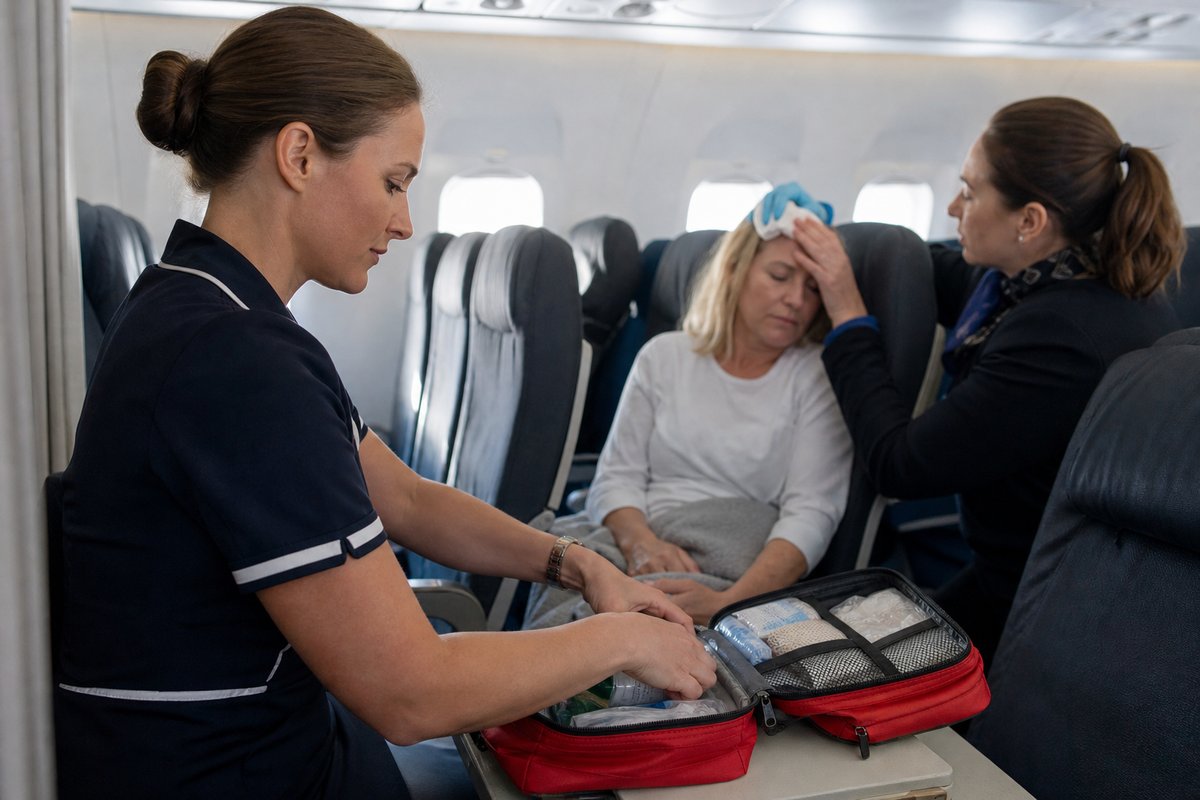
The Federal Aviation Administration is considering a major change to how commercial aircraft are stocked for medical incidents, after reviewing data from tens of thousands of in-flight emergencies with researchers from Duke University. The agency’s proposal would replace a detailed 64-item checklist with a broader standard that focuses on whether airlines can respond to nine specific medical situations.
From item-by-item compliance to emergency coverage
According to the report, the review of 77,000 in-flight medical emergencies found that fewer than 10% of cases on flights required follow-up medical attention on the ground. It also noted that most treatment provided during flight involved minor issues such as cuts, bruises, sprains, and strains, which can usually be handled with basic supplies. Based on those findings, the FAA wants airlines to have flexibility in how they assemble first aid kits, as long as the kits can address cardiac emergencies, breathing problems, opioid overdoses, severe allergic reactions, major bleeding, seizures, hypoglycemia, gastrointestinal emergencies, and childbirth.
The new approach would still require every aircraft to carry an automated external defibrillator, but it would move away from strict line-by-line inventory rules. Under the current system, a missing required item can keep a plane from flying legally, even when the absence involves a single medication or supply. The report says waivers have been used in some cases, including for dextrose used to treat hypoglycemia, but those exceptions still require an approval process.
The FAA said the proposal is intended to modernize emergency medical kit requirements and give airlines a performance-based framework that can adapt with current medical science. A separate study cited in the report examined 84 airlines carrying more than three billion passengers and found that fewer than 0.50% of flights used first aid in the air, with more than 90% of those cases involving minor injuries. The Aerospace Medical Association has also developed a similar performance-based approach, reflecting a broader effort to reduce operational delays while maintaining a standard level of care onboard.
Source: simpleflying.com