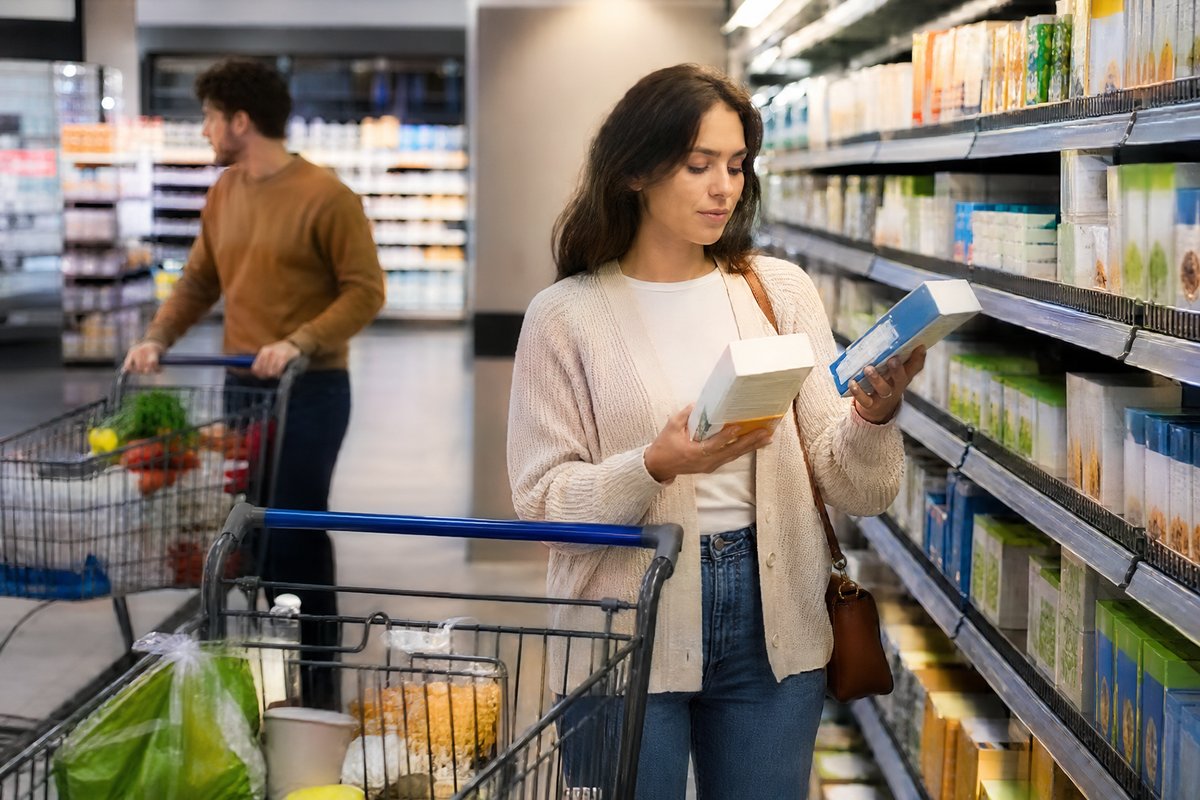
The U.S. grocery market is losing momentum as shoppers pull back on how much they buy, creating a tougher backdrop for food manufacturers and retailers. According to new analysis from Bain & Company using NielsenIQ data, grocery unit sales fell 1.8% in June from a year earlier, reversing a 0.1% increase in June 2025. Even though prices are still rising by roughly 2% to 3% annually, that is no longer enough to offset weaker volume.
Bain said grocery prices are about 33% higher than they were in 2019, a jump that is changing how consumers behave at the store. The report points to several forces weighing on spending, including higher fuel costs and tighter household budgets. Lower-income shoppers have also faced added strain from reduced SNAP benefits and stricter eligibility rules. In Bain’s May U.S. Consumer Pulse survey, 80% of Americans said they are still trying to spend less, while 28% said they are actively cutting grocery spending.
Among those cutting back, the most common responses are trading down to cheaper brands, buying fewer items and leaning more heavily on coupons and promotions. Those shifts are already showing up in company results. PepsiCo said North American demand weakened in its second quarter, with North America food revenue down 2% while volume was flat. CEO Ramon Laguarta said the consumer is worse than expected, and executives also pointed to lower effective pricing as the company stepped up promotions.
The pressure is spreading across the retail landscape as grocers push value messaging and price cuts to keep traffic moving. Walmart and Kroger have both emphasized promotions, while Walmart has announced summer price cuts on items including beef, ice cream and products from PepsiCo, Coca-Cola and its Great Value private label. Analysts say the industry is increasingly focused on restoring unit growth, not just sales growth in dollars. Bain said the retailers best positioned in this environment will be those that can offer sharp pricing on the products shoppers notice most, supported by promotions, loyalty programs, personalization and private-label options.
Source: cnbc.com