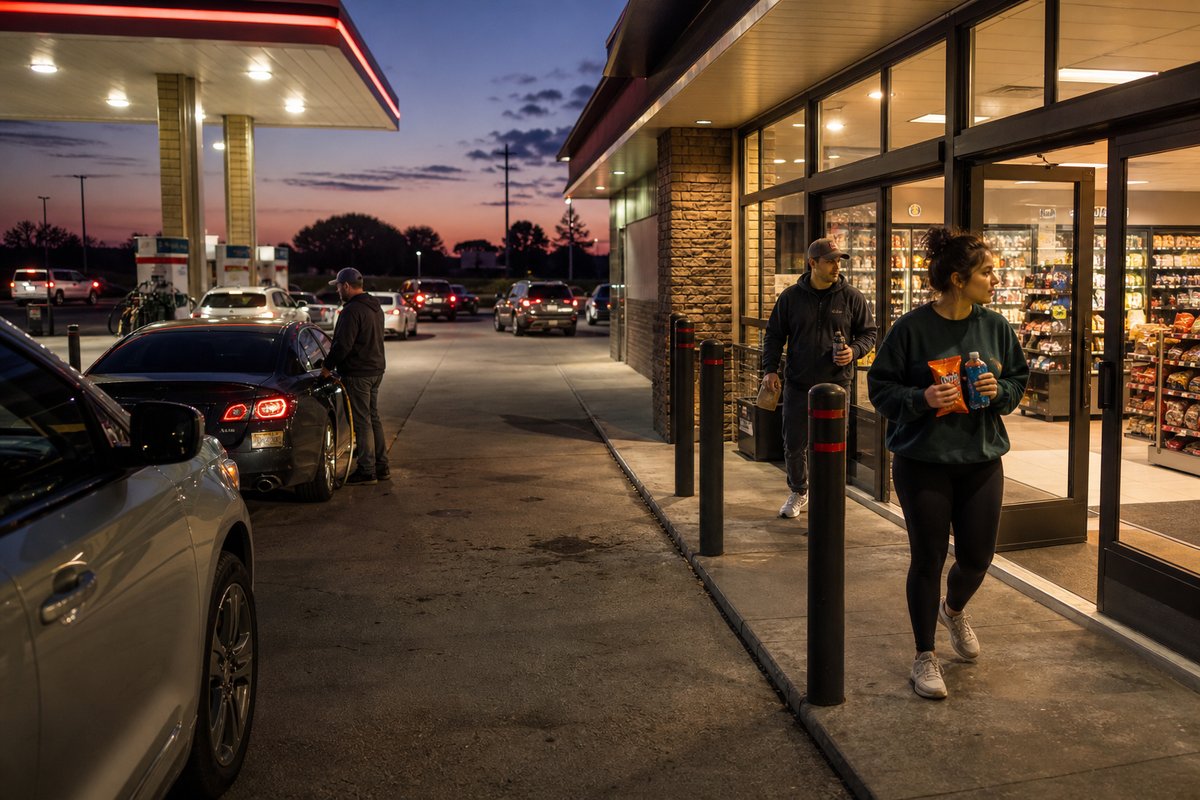
Rising gas prices are beginning to reshape a small but important part of retail behavior: the quick, unplanned purchase at the gas station. Industry executives and analysts say higher fuel costs are not only affecting how often consumers drive, but also where they choose to fill up and what they buy once they arrive.
PepsiCo executives pointed to that shift during the company’s second-quarter earnings call, saying sales in “impulse channels” such as gas stations and convenience stores have been under pressure, likely because of higher gas prices and the Iran War. Ramon Laguarta, PepsiCo’s chairman and CEO, said the company has seen a slowdown in the conversion of traffic into purchases. Even so, PepsiCo reported net revenue up 6.4% year over year for the quarter.
Recent foot-traffic data supports the concern. According to Placer.ai, visits to gas stations have been declining consistently since mid-April, and for the week of June 29 they were down 4.1% from a year earlier. The firm tracks weekly visits across more than 30 U.S. gas station chains with on-site convenience stores. At the same time, shoppers are increasingly gravitating toward places offering cheaper fuel, which can shift spending patterns across retail channels.
Warehouse clubs and prepared food gain an edge
That dynamic may be helping warehouse clubs. Placer.ai said visits to warehouse clubs were up 9.6% year over year for the week of June 29, a sharp contrast with gas-station traffic. Elizabeth Lafontaine, Placer.ai’s director of research, said members increasingly see warehouse clubs as value-focused one-stop destinations where gas is an added benefit, not the only reason to go. She also noted that many convenience stores have expanded fresh and prepared food offerings since the pandemic in an effort to win more of the shopper’s basket.
Casey’s General Stores, which operates about 2,900 locations across the Midwest, said it believes a higher-price fuel environment can work in its favor because its gas is generally priced toward the lower end of the market. CEO Darren Rebelez said that could bring more customers into stores, and he pointed to a 10% increase in Casey’s pizza sales as evidence that shoppers are still willing to spend more after stopping for fuel. PepsiCo, meanwhile, said it is trying to improve conversion in convenience stores through bundles and meal-linked offers as it works through the near-term pressure on the channel.
Source: modernretail.co