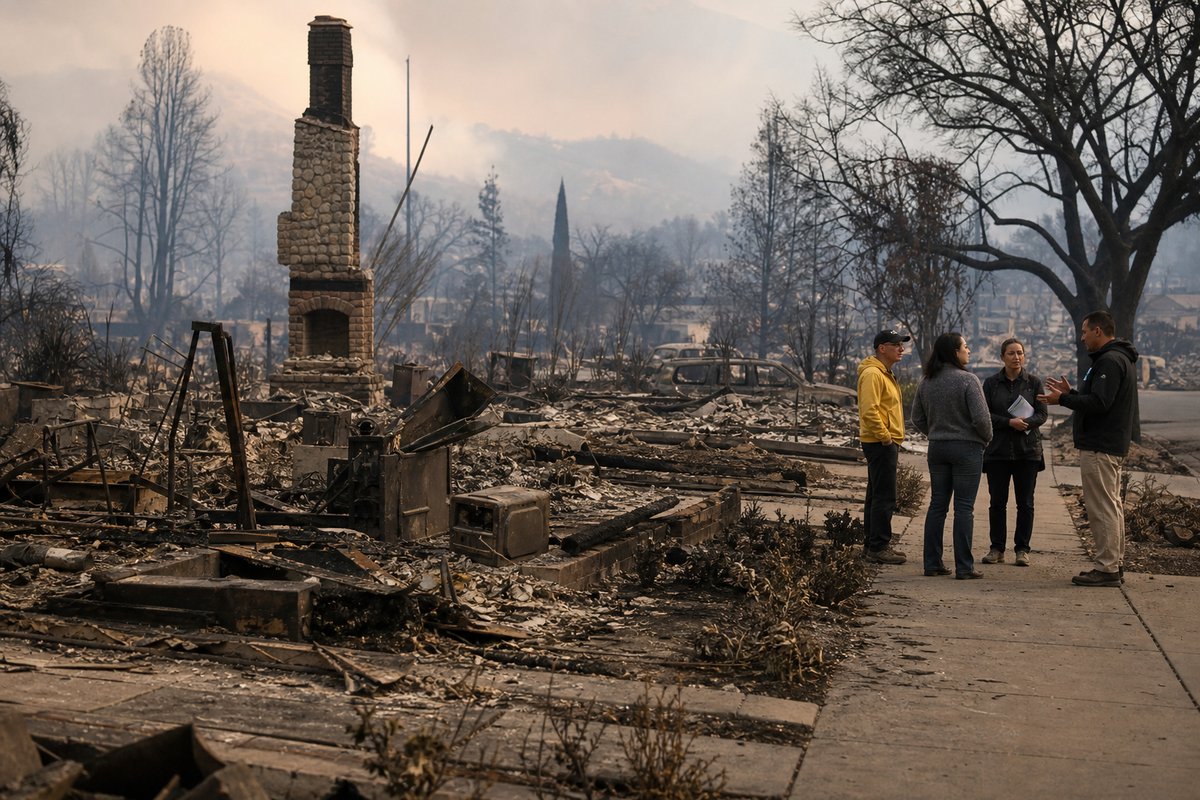
California’s wildfire recovery remains caught between state-level mortgage relief and the absence of a federal plan. At a recent House hearing on the U.S. Department of Housing and Urban Development’s 2027 budget, California Rep. Norma Torres asked when the administration would deliver a disaster recovery package for residents who lost homes in the January 2025 fires. HUD Secretary Scott Turner did not provide a timeline, instead pointing to local leadership.
The delay matters because the fires left a deep housing and financial strain in their wake. The Eaton Fire in Altadena and the Palisades Fire in Pacific Palisades damaged 59 square miles, displaced thousands of residents and caused an estimated 440 deaths. Many households are still dealing with displacement, insurance complications and the long process of rebuilding. According to the report, those pressures have created a chain reaction across housing, insurance and financial stability.
State forbearance helps, but lenders want a broader plan
California’s Mortgage Forbearance Act, known as AB 238, now requires lenders to offer up to 12 months of forbearance for borrowers facing financial hardship tied to the January 2025 wildfires. The measure, signed into law in September 2025, gives some immediate breathing room. But mortgage leaders say it is not enough on its own. The California Mortgage Bankers Association argued that forbearance without a clear recovery path can simply postpone distress rather than resolve it.
Industry leaders say the situation shows why disaster response cannot be left to a patchwork of local efforts. California contributes $275 billion more in federal taxes than it receives in federal funding, and lawmakers and housing stakeholders in the state have been pressing for a coordinated federal approach that brings together state officials, insurers, housing professionals and mortgage companies. For servicers, lenders and loan officers, the problem is already on their desks: they are handling borrower calls, managing forbearance and trying to work through insurance delays while families remain out of their homes. The report argues that when a house burns down, someone has to show up — and in this case, the industry and affected homeowners are still waiting for Washington to do so.
Source: housingwire.com