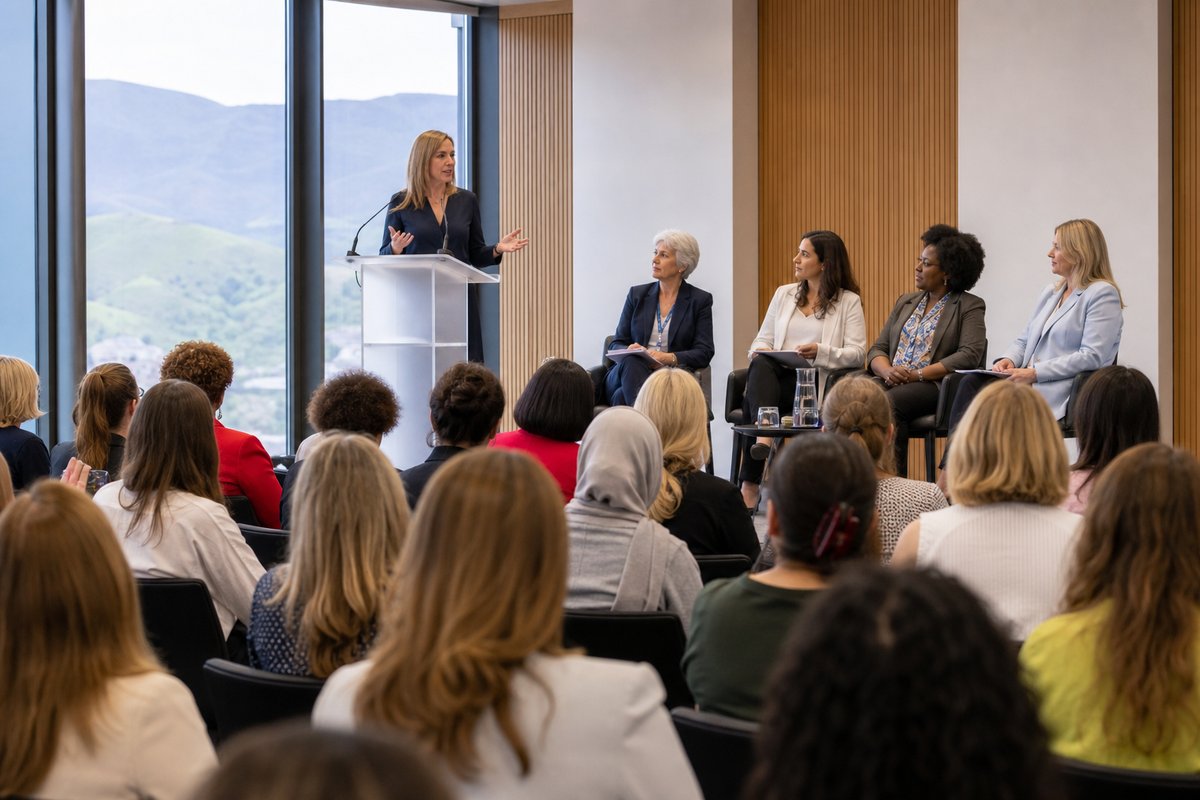
A women’s health summit in Cardiff has placed renewed focus on the way pain in women is handled within the NHS, with speakers arguing that symptoms are too often treated as something to tolerate rather than investigate. The event brought together clinicians, researchers and women with lived experience, and it is expected to lead to minimum standards designed to keep women’s voices central to future healthcare planning in Wales.
Among those sharing their experience was Donna Davies, 56, from Swansea, who said an operation nearly two decades ago left her in ongoing pain after a vaginal mesh device was fitted for stress urinary incontinence. She said the discomfort became so severe that it felt like being cut with glass whenever she moved. According to her account, she did not feel taken seriously by medical staff until her husband described an incident to the surgeon. The mesh was later removed, and a sling was created using her own muscles at the same time as a total hysterectomy.
Davies said she has never fully recovered and now faces the removal of her large bowel, along with a permanent stoma. She also said there are no specialist services in Wales for women in her position, despite specialist centres being available in England. Her experience was presented alongside wider concerns that women in Wales can feel overlooked when it comes to diagnosis, treatment and follow-up care.
Calls for stronger services and faster action
Welsh women’s health minister Delyth Jewell told the summit she wants rules tightened so health boards must involve women in designing services for them. She said women should be believed about their bodies and argued that women’s health services should be treated as a necessity rather than an optional extra. She also said training needs to improve and that women should be given greater priority in theatre space.
Isabel Linton of the charity Fair Treatment for the Women of Wales said the difficulty is not only getting a diagnosis, but securing treatment afterwards. She highlighted barriers to moving between health boards and said women’s health must be understood more broadly than obstetrics, gynaecology, periods and childbirth. She pointed to conditions such as autoimmune disorders and cardiovascular disease, noting that women are more likely to die of a heart attack because symptoms are often based on male presentations.
The summit comes as Wales continues work on its Women’s Health Plan, launched in December 2024 under the previous Labour government. Officials said further feedback from women will be gathered later this year, while Jewell said she wants urgent progress and is concerned about long waits for gynaecological services. She said those delays must come down and that the whole health service will need to work together to improve care.
Source: bbc.co.uk