Homebuilders are under more pressure to control costs and timelines as the market becomes less forgiving. According to the report, builder confidence fell to 37 in May, which marked the 25th straight month below the breakeven level of 50 in the NAHB/Wells Fargo Housing Market Index. At the same time, single-family construction schedules remain about two months longer than they were a decade ago, leaving more capital tied up before homes can be sold.
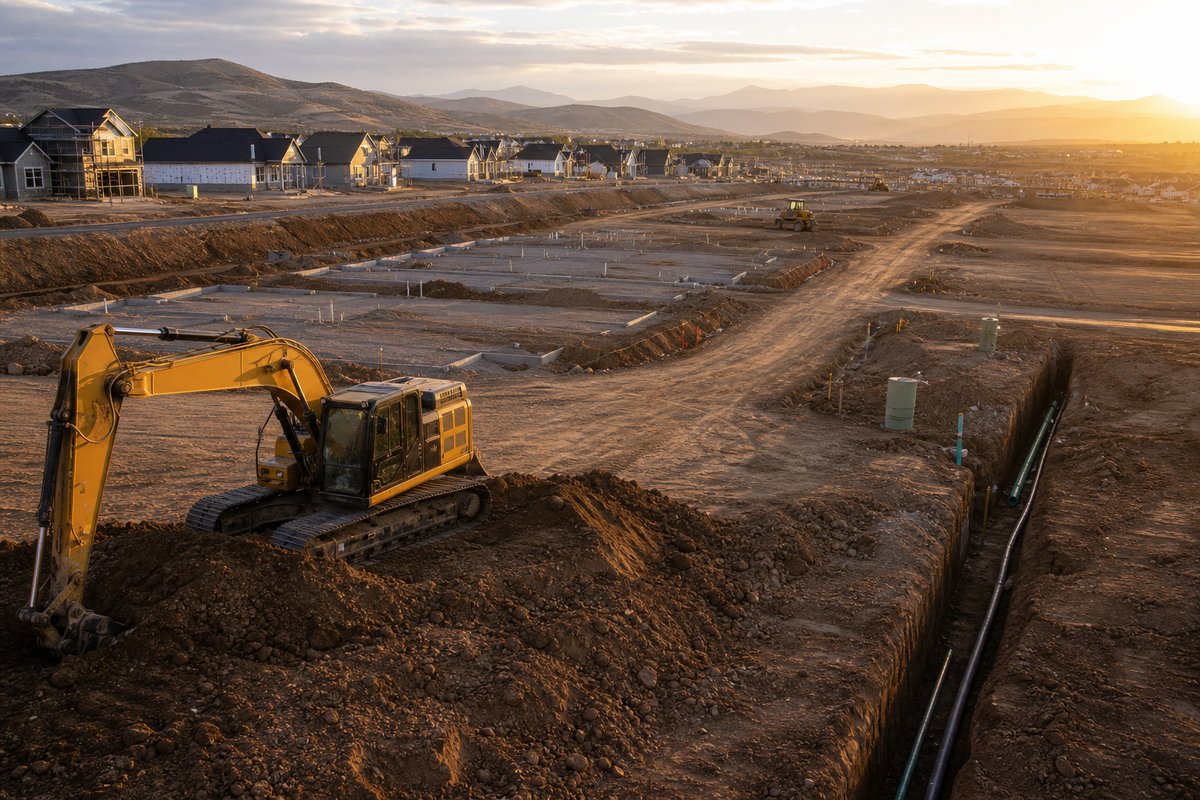
That strain is pushing more attention toward the earliest part of the development process: turning raw land into build-ready lots. The article says builders have spent years improving vertical construction through standardized plans, tighter schedules and better tracking systems. Horizontal development has been harder to optimize because every site comes with different soil, grading, drainage, weather and regulatory conditions, along with contractor coordination challenges. As a result, lot development has often been less predictable and more difficult to benchmark.
The report also points to the financial cost of that uncertainty. The Home Builders Institute estimates the skilled labor shortage costs the single-family homebuilding industry $10.8 billion a year, including $2.7 billion in added carrying costs from longer schedules. On the development side, builders may be forced to estimate earthwork, utility needs, lot yields and timelines before they have complete information. Even small overruns can matter: the NAHB Cost of Doing Business Study in 2024 found builders averaged an 11% margin of the sales price, and on a $5 million land development budget, a 2% to 3% overrun can erase $100,000 to $150,000 in profit.
According to the article, the key challenge is not just knowing that work is happening on a site, but knowing whether it is truly moving toward completed lots. Real-time visibility into site conditions and horizontal cycle times can help builders spot delays earlier, forecast delivery more accurately and improve capital efficiency. In a market where higher home prices can no longer reliably cover unexpected costs, that kind of clarity is becoming a competitive advantage.
Source: housingwire.com