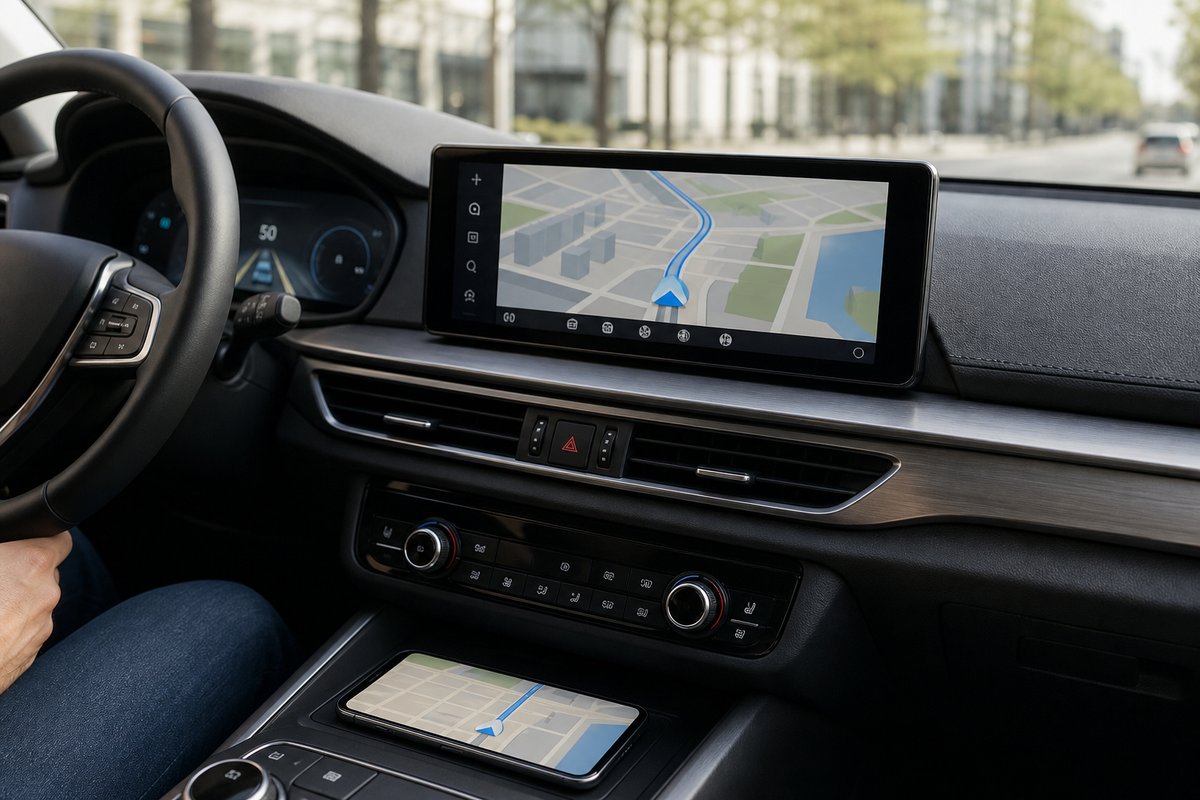
Wireless Android Auto may feel like a simple, cable-free connection, but according to the report it depends on two wireless systems working together. Bluetooth and Wi-Fi each handle a different part of the process, and neither one can deliver the full experience on its own.
How the connection is split between two technologies
Bluetooth is used first to establish the initial connection between the phone and the car. It performs the pairing handshake and exchanges the information needed to start the session. Bluetooth also stays active for hands-free calling, routing voice audio through the car’s speakers using the Hands-Free Profile. If Bluetooth is turned off, wireless Android Auto stops working.
After that first step, the phone moves to a local 5GHz Wi‑Fi Direct connection. That second link provides the bandwidth required for the Android Auto interface, audio from streaming apps, and other data such as GPS details, touch input, voice commands, odometer information, and ambient light readings. The report notes that Bluetooth alone does not offer enough throughput for continuous video projection, which is why 5GHz Wi‑Fi support is necessary.
For vehicles that only support wired Android Auto, the report says dongles such as Carlinkit, AAWireless, and the Motorola MA1 can bridge the gap by using the same Bluetooth-plus-Wi‑Fi approach. There are trade-offs, though: both wireless radios must remain on, battery use can rise, and dongles may introduce a delay. The report also says wireless Android Auto requires a phone running Android 11 or newer with 5G capabilities.
Source: engadget.com