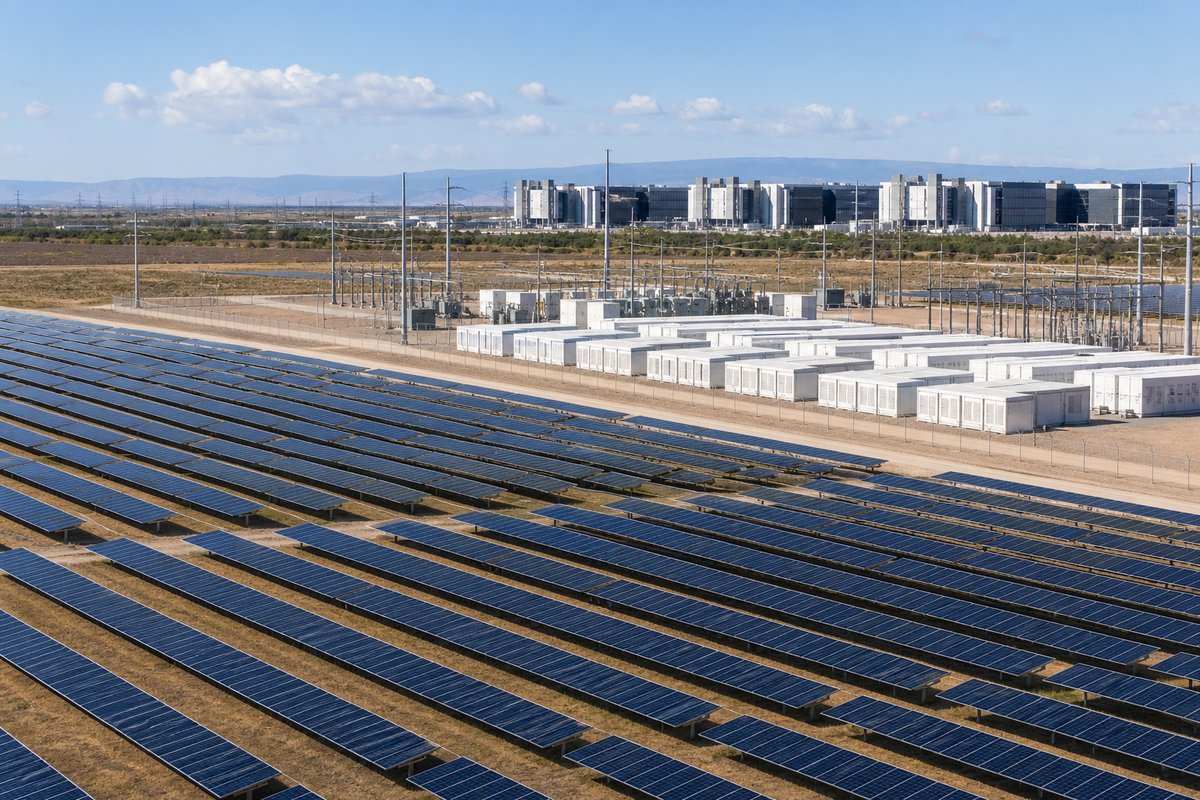
Google has made a deal to take the full initial output of Steel River Energy Center, a large solar project in Arkansas, according to the report. The agreement is intended to help balance emissions linked to the company’s fossil-fuel-powered data center electricity use, even though Google will not consume that solar power directly.
Once the project begins operating in 2029, the first phase will provide 1.6 gigawatts of solar generation and 2 gigawatts of battery storage, enough to supply about 315,000 homes. Google will pay a fixed price for the electricity, while its own operations continue to draw from the grid, which includes coal, nuclear, renewables, natural gas and on-site power systems. The solar project’s electricity will become part of that broader grid supply.
Big tech’s energy appetite keeps rising
The report says the full project will eventually deliver 2.45 gigawatts of solar capacity and 2.9 gigawatt-hours of battery storage. The first two of its three phases have already secured $3.5 billion in financing, with an emphasis on US-made steel and solar panels. Google’s electricity use rose 37 percent last year, lifting its grid-based emissions by the same amount, and other major tech companies, including Meta and Amazon, have also seen steep increases in power demand as AI-driven data centers expand.
That surge has intensified interest in clean energy deals that can offset fossil fuel use, although the practice remains controversial among some experts. Meta recently agreed to buy the full output of a 200MW solar plant in Texas, while Amazon committed to a 1.2GW solar and battery project in Oregon that had been facing difficulties.
Source: engadget.com