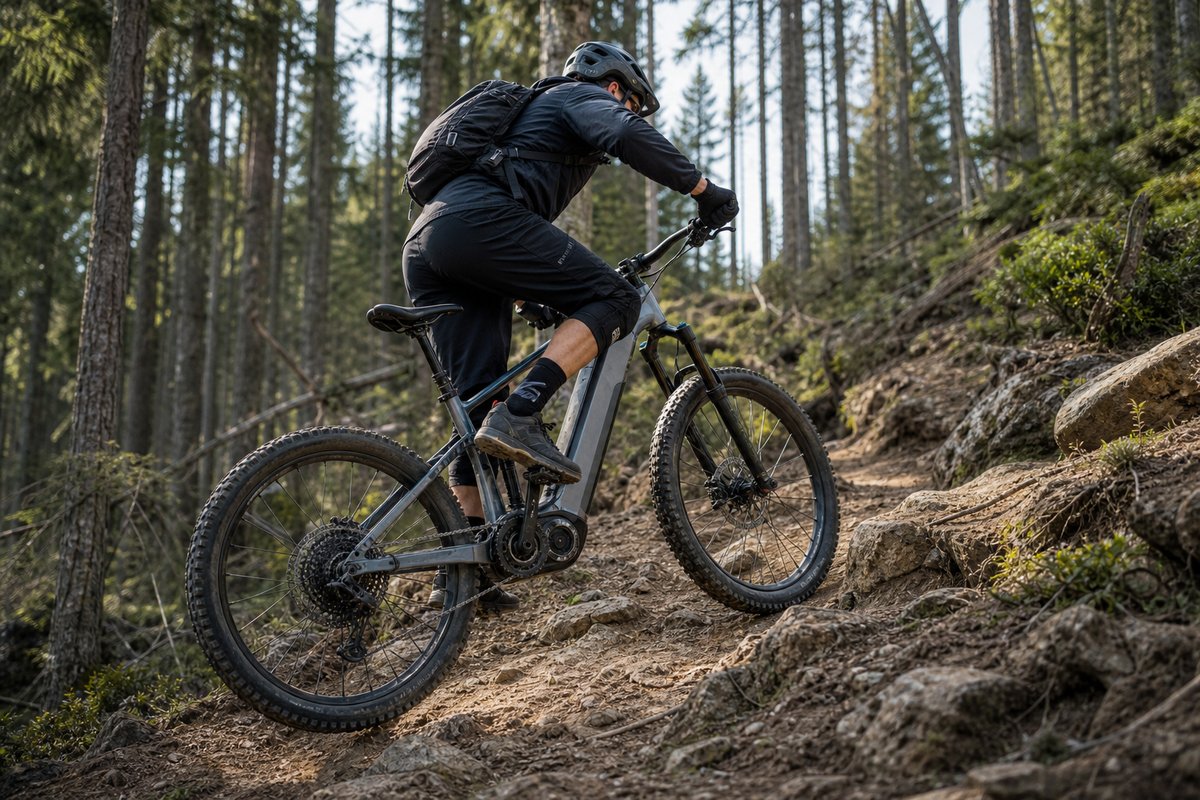
Electric mountain bikes are no longer being dismissed as a shortcut for riders who want to avoid effort. In the account, a long-time skeptic says a recent ride on the Amflow PX Carbon Pro changed that view, largely because of its compact Avinox M2S motor, a new component from a DJI-linked offshoot that has drawn attention from established players such as Bosch and Specialized. The rider describes the bike as a machine that does not turn someone into a speed specialist, but does help smooth out weak moments in technique and keep momentum alive on difficult terrain.
The piece places eMTBs in a broader pattern of mountain biking adopting once-controversial technology. Features such as full suspension, disc brakes, dropper posts, and 29-inch wheels were once treated as signs that the sport had become too easy, but they are now common equipment. In that context, the article argues that strong electric motors are simply the next step in the sport’s evolution. For riders, the business implication is clear: what was once niche or controversial is increasingly being normalized as standard equipment, opening the door to wider acceptance and more mainstream demand.
How the technology changes the ride
According to the report, the biggest benefit shows up on long, steep, technical climbs, where the motor turns punishing ascents into something more manageable and more enjoyable. The rider still chooses how much work to do, switching between higher assist when needed and lower assist when wanting a harder workout. The article also notes that the European version of eMTBs is limited by regulation: pedal assistance cuts off at 25km/h, and continuous output is capped at 250W. That means these bikes are not built to dominate straightaways, but to provide a force multiplier that works alongside the rider rather than replacing them.
The story also ties the appeal of eMTBs to confidence and safety. The writer, who began mountain biking during the pandemic and later suffered a serious crash, says the motor made riding feel more controlled and less intimidating. In that sense, the technology is not just about speed or convenience. It is shaping how riders engage with the sport, how often they stay on the trail, and how manufacturers position electric bikes as a practical, increasingly accepted part of the mountain biking market.
Source: theverge.com