A former London Underground cleaner has said passengers should understand the health and safety risks highlighted by his whistleblowing case, after an employment tribunal found he had been unfairly dismissed for raising concerns about asbestos and other toxic dust. Micky Steeds, who began working on the tube network in 2018, said the issues he reported were serious enough to affect not only workers but also the travelling public.
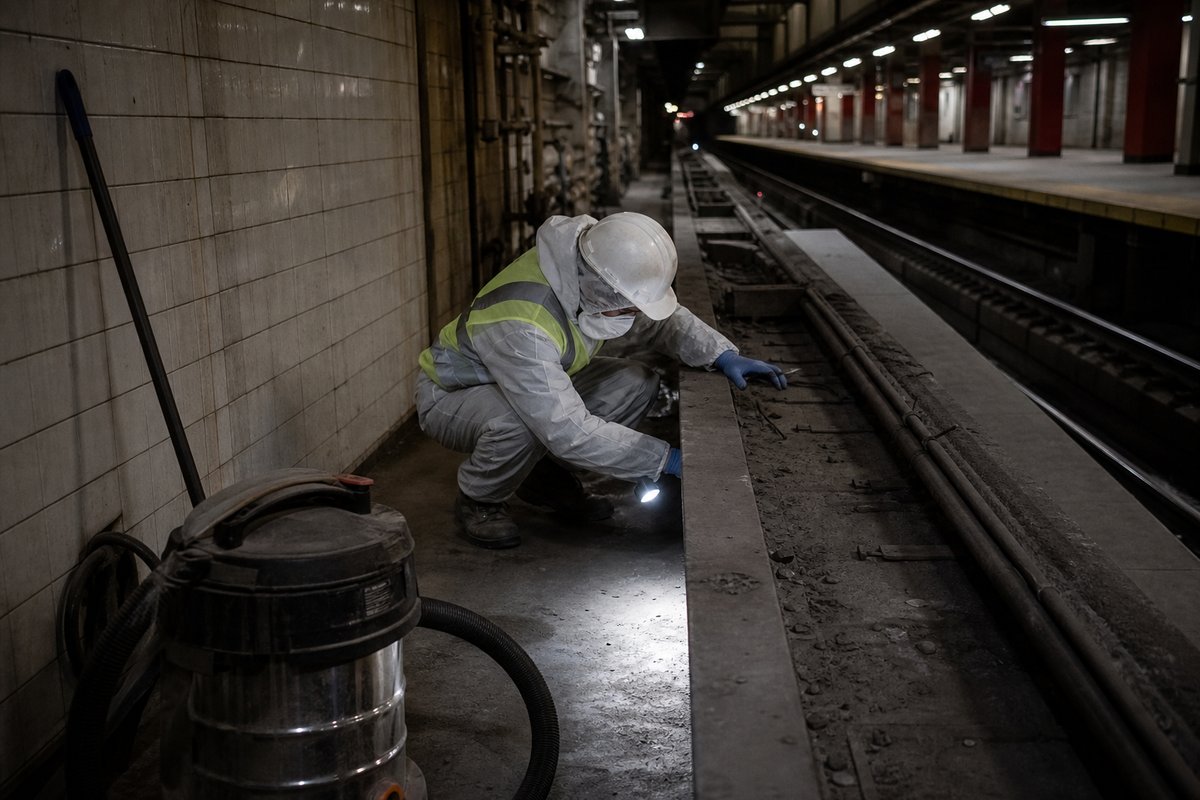
Steeds’ job involved clearing decades of dust from vents, lift shafts and inverts, the narrow channels beneath station platforms that carry cabling. He told the tribunal that the dust was often so dense he could barely see his hands, and that one cleaning shift at Tottenham Court Road triggered station fire alarms after so much dust was disturbed. According to the hearing, the material could contain asbestos as well as chromium, arsenic, silicates and iron oxide.
The tribunal heard that for the first 15 months Steeds was not provided with a proper protective mask, and that paper masks sometimes became blackened after use. He also said he was trained on asbestos handling only after 19 months of cleaning asbestos-sheathed cables with stiff vacuum brushes. In March 2023, he complained to a manager that hazardous waste was being placed in general waste bags rather than being double-bagged and treated as special waste. The tribunal later found that his concerns were genuine and reasonable, and ruled that his complaints amounted to protected disclosures under employment law.
London Underground had argued that the work was safe and that the cleaning methods did not disturb asbestos. But the tribunal concluded that asbestos reports existed at all sites, that asbestos was clearly present and could be disturbed by dry cleaning, and that the company had not shown it was fully complying with hazardous waste disposal rules. It also found that Steeds was given an unfair choice after being signed off with anxiety in August 2023: retract his complaints and return to work, or be dismissed. The panel said the main reason for his dismissal was that he had made protected disclosures.
Source: theguardian.com