President Donald Trump’s suggestion that ships passing through the Strait of Hormuz should pay a 20% fee to the United States has triggered concern across the global shipping sector. Industry executives say the idea could make an already sensitive route less attractive at a time when traffic through the waterway has already weakened.
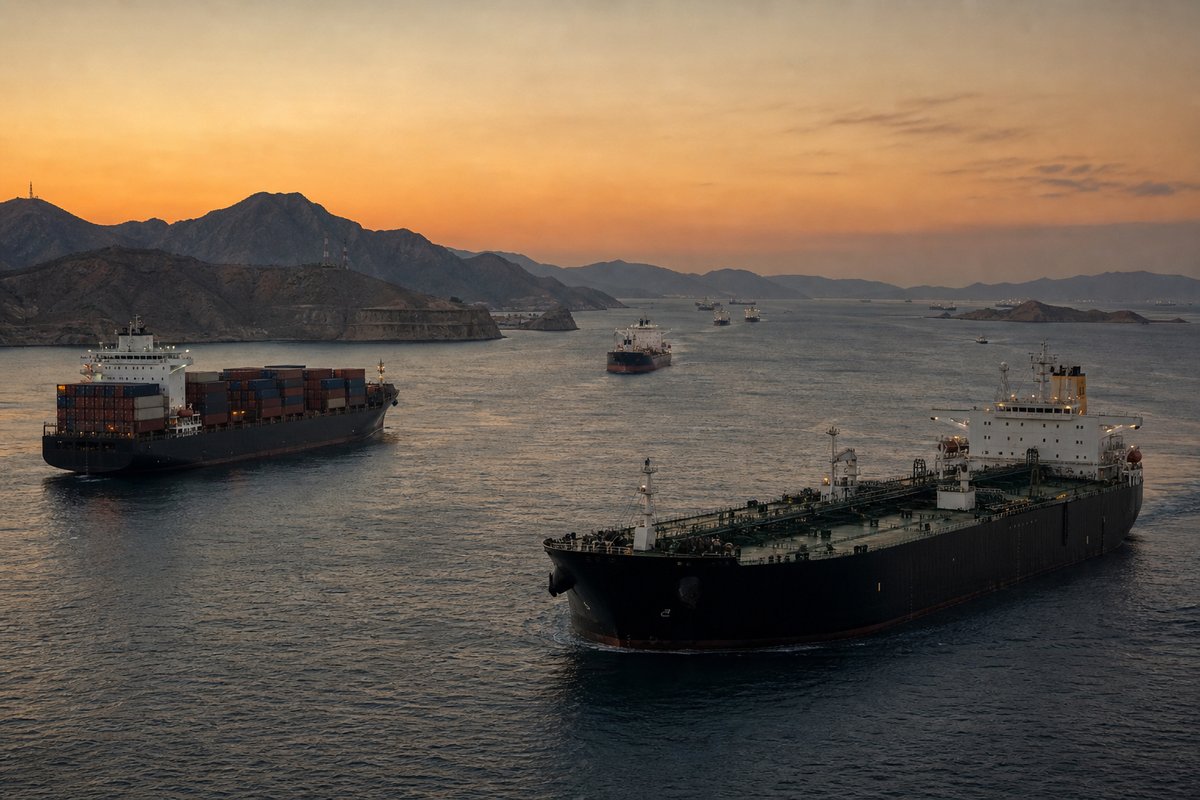
The Strait of Hormuz is one of the world’s most important shipping lanes, but vessel movements have fallen sharply in recent days. According to Kpler data cited in the report, only 14 ships crossed the strait on Sunday, including four crude tankers, compared with 37 vessels a week earlier. The Baltic and International Maritime Council, the largest shipping association in the world, warned that any added cost would likely act as a further deterrent unless security risks from Iran were substantially reduced.
Hapag-Lloyd, one of the major shipping companies responding to the proposal, said it was fundamentally wrong to charge tolls for passage through international waters. The company drew a distinction between waterways such as the Suez Canal and the Panama Canal, where fees are tied to major infrastructure, and the Strait of Hormuz, where it said that rationale does not apply. The report also notes that the U.S. had previously opposed Iranian attempts to impose tolls in the same waterway, with officials describing such plans as illegal under international law.
The proposal comes as tensions in the region remain elevated after a ceasefire agreement between the U.S. and Iran appeared to fray, with hostilities continuing for a third day on Tuesday. In a social media post, Trump said the U.S. would act as the “guardian” of the strait and should be reimbursed for ensuring safe passage. Iranian Foreign Minister Abbas Araghchi responded with a mocking post of his own, saying Iran had always been the guardian of the Strait and would remain so.
Source: cnbc.com