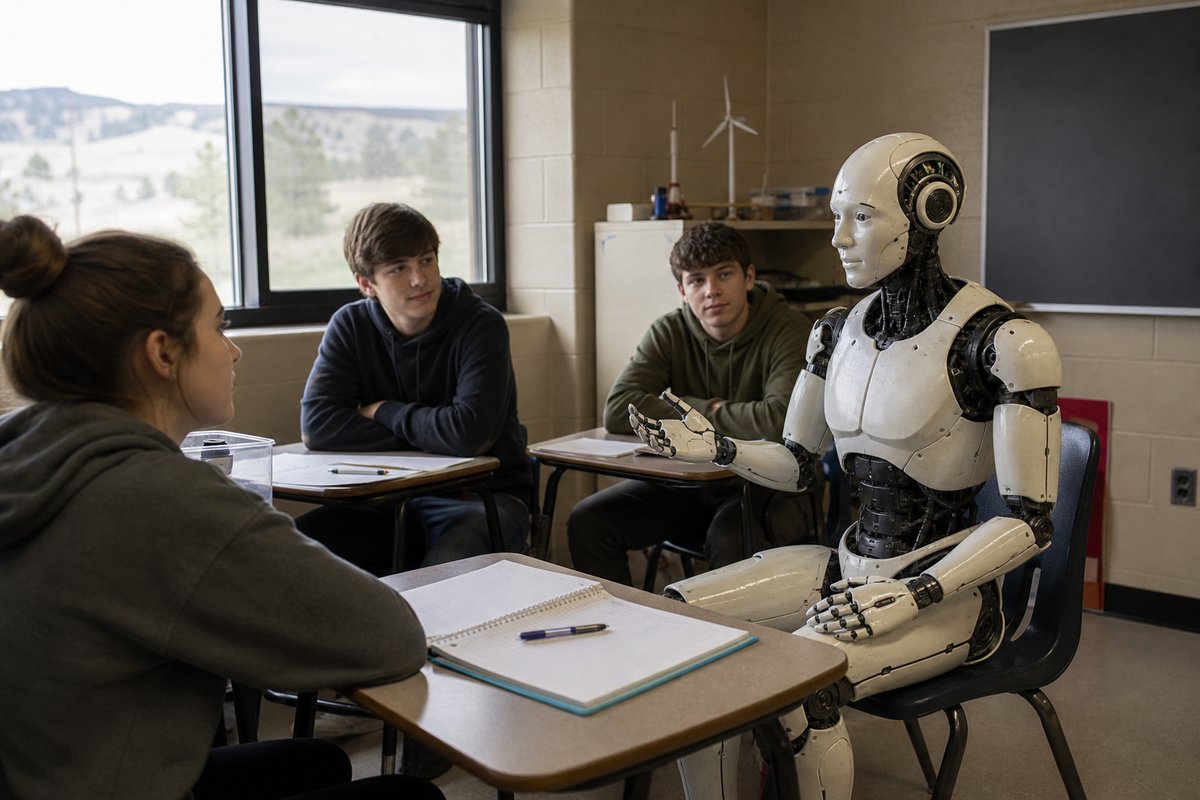
Realbotix, the publicly listed company that evolved from a crypto business and later acquired sex doll maker Simulacra, is now trying to sell its AI robotics platform as an education product. According to the report, the company wants to place its technology in a school district in Salamanca, New York, where it says its software can support STEM learning for teenagers.
The system centers on Optio AI, which Realbotix says can act as a teacher’s assistant or home tutor. In the company’s description, students would interact with personalized avatars built around district curriculum, with support for concept reinforcement, one-on-one tutoring, multilingual help, and homework assistance available around the clock. That software would be paired with a Realbotix M-Series humanoid robot designed to use conversation, facial expressions, and real-time interaction in the classroom.
A costly pilot for a small district
The pilot is set for Salamanca, a city in Cattaraugus County with a population of 5,929 and land within Seneca Nation territory. The district has already spent $57,590 on the project, which Realbotix CEO Andrew Kiguel said is below the company’s standard $95,000 price. The report notes that the district’s median family household income is $30,996 and that 22.2 percent of residents live below the poverty line.
One robot, called Sally, will not move around the classroom but will sit in a chair and interact directly with students. According to New York Focus, the AI system is designed to remember prior conversations and continue them on later days, while students will also be able to use an avatar version of the software at home for homework support. Realbotix says the Salamanca test, expected to reach 500 students this fall, is meant to be its flagship deployment and the start of a broader rollout. The company also says the platform is intended to strengthen credibility for AI, robots, and STEM education.
The project arrives amid wider concerns about AI in schools, but Realbotix is betting that its unusual hardware and software combination can turn a controversial product into an education business.
Source: kotaku.com