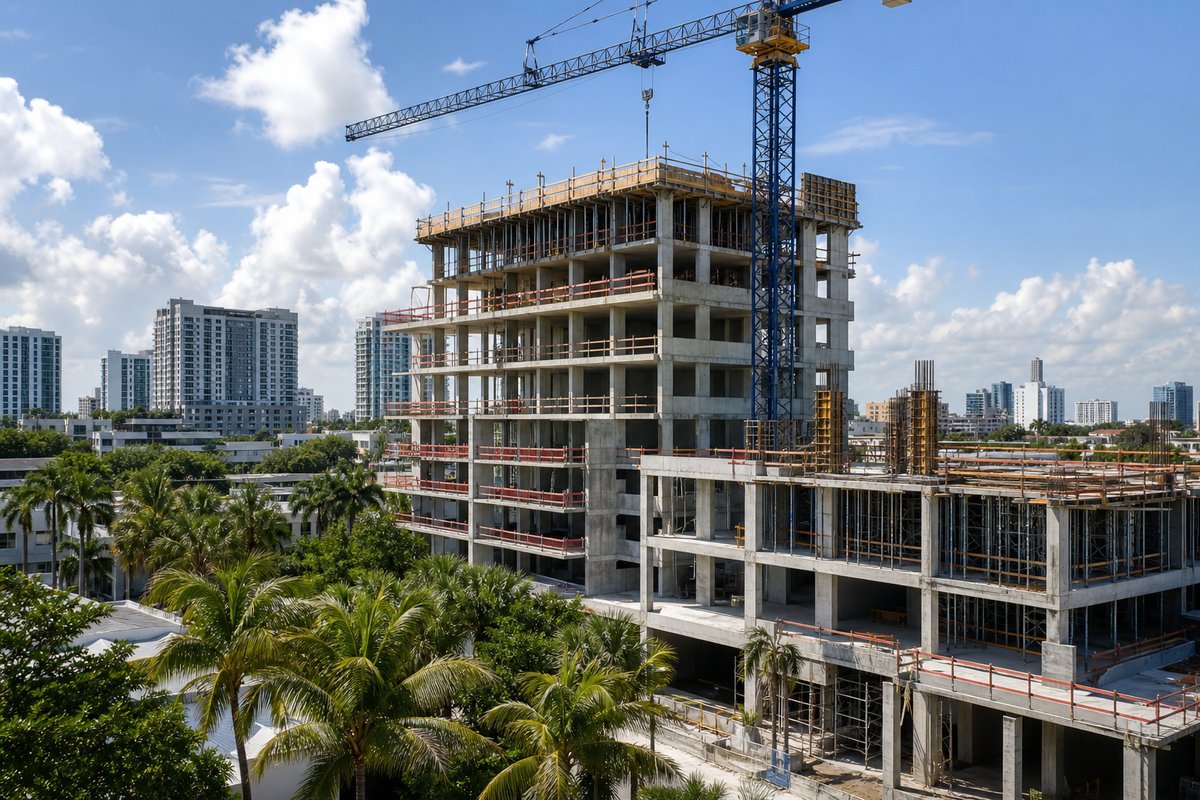
Miami developer and investor Neology Group has raised $175 million in new capital, a move the firm says will help it pursue about $1 billion in multifamily opportunities in Florida and across the Southeast. The raise comes at a time when apartment construction nationally has slowed and the share of units under construction has fallen to its lowest level relative to existing stock since 2013, according to the report.
Neology founder Lissette Calderon said the capital came from a mix that included long-time family office and private investor partners, along with new institutional investors. She did not identify the new backers. The company’s fundraising follows a broader pullback in apartment investment that began in 2022 as borrowing costs and construction expenses rose, making developers and equity providers more selective.
Selective expansion beyond Miami
Neology has spent the past two decades building in Florida, largely in Miami, where it says it has developed more than 2,000 condominiums and 5 million square feet of residential space. The firm currently manages about 1,000 apartments and has another 4,500 units in its pipeline. Calderon said Florida remains the company’s main market, but the new capital will also support a search for opportunities elsewhere in the Southeast, with any expansion expected to be selective and driven by specific deals.
The company is also moving into larger district-scale projects that blend housing with retail, hospitality and cultural uses. Last month, Neology announced a partnership with the Don and Mera Rubell family and Lion Development Group on a three-phase development in Miami’s Rubell Arts District. The plan includes a 21-story tower with roughly 330 apartments and 10,000 square feet of ground-floor retail near the Rubell Museum.
The timing of Neology’s raise reflects a market that is showing signs of renewed leasing strength even as new supply remains limited. According to recent industry reporting, renters absorbed more units than were delivered for the first time since early 2022, while only 3.5% of existing apartment stock is now under construction nationwide. In Florida, where construction surged during the pandemic and rent growth ran especially hot, activity has cooled, particularly in the higher-end segment. That slowdown has also made the state a focus for policymakers seeking more housing supply, including through the Live Local Act, which has been updated four times since its passage in 2023.
Private capital is increasingly positioning for the next construction cycle, although the timing remains uncertain. Some forecasts point to later this year, while others look as far out as 2028. Meanwhile, transaction activity remains uneven, and equity financing continues to be a key constraint on sales and new development, according to the report.
Source: housingwire.com