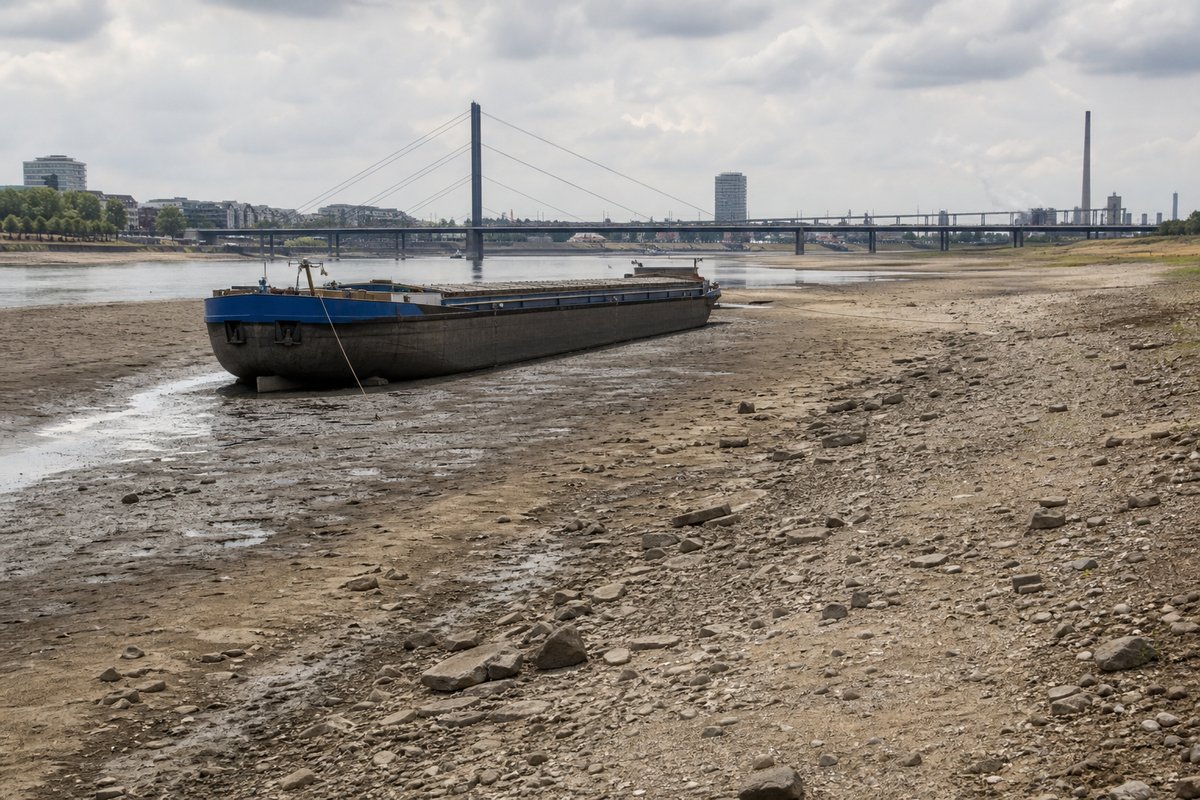
Europe’s prolonged summer drought is becoming an economic problem as well as an environmental one. Very low water levels on major rivers are interfering with power generation, freight transport and river shipping, while some governments are resorting to unusual measures to keep vital infrastructure operating.
In Romania, authorities temporarily shut down the country’s only operating nuclear reactor that is cooled by the Danube, and the navy has been used to carry out underwater detonations aimed at improving the flow of water toward the Cernavoda Nuclear Power Plant’s cooling systems. Low water on the same river has also put Hungary’s Paks nuclear plant under pressure and forced Serbia to scale back hydropower output, according to the report.
Rhine levels hit historic lows
Germany is facing a similar strain on the Rhine, one of Europe’s most important commercial waterways. Water levels at Kaub, a key bottleneck for traffic heading toward southern Germany and Switzerland, have dropped to 24 centimeters, the lowest reading since records began in 1880 and far below the 78-centimeter level considered critical for navigation. Barges can still move, but they must carry lighter loads, and shipping costs rise as low-water surcharges increase.
The effects extend well beyond transport. The report says major rivers such as the Rhine and Danube are essential not only for trade but also for industry and energy production, so falling water levels can push up costs across the economy. According to Liz Saccoccia of the World Resources Institute, nuclear plants in Hungary, Romania and France, along with hydropower facilities in Serbia, have already had to reduce output because of limited water for cooling or power generation.
Low river levels are also affecting agriculture and tourism. Farmers along the Danube have struggled to move crops, while cruise ships have been unable to reach ports including Budapest. In Germany, economist Stefan Kooths of the Kiel Institute for the World Economy said the Rhine situation could trim gross domestic product by as much as 0.2% in the third quarter if water levels do not recover quickly.
Source: cnbc.com