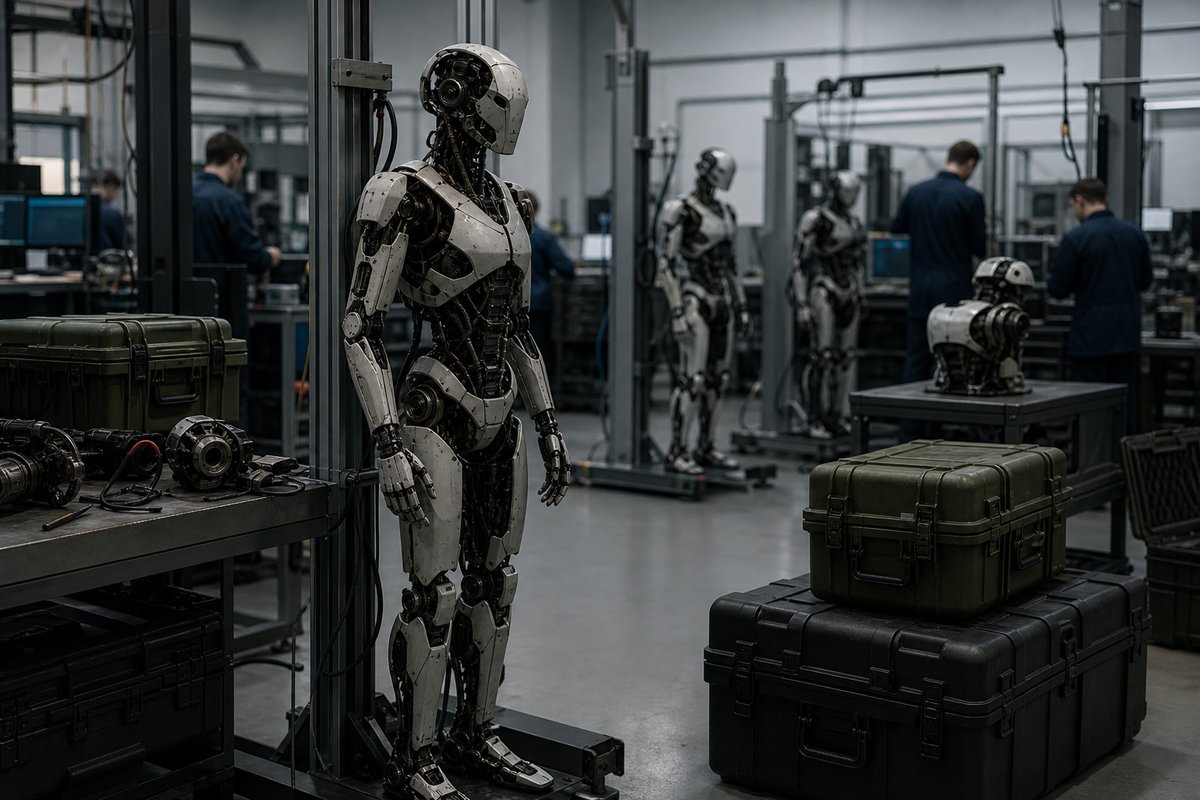
A recent report says a startup called Foundation Future Industries is trying to turn humanoid robotics into a defense business, with combat-oriented bipedal machines at the center of its pitch. The company’s unusual public profile comes not just from its technology ambitions, but from the presence of Eric Trump as chief strategy advisor.
A military robotics play built around humanoids
Military robotics is already a crowded field, with drones and other systems widely used on the battlefield. What makes Foundation stand out, according to the report, is that humanoid robots are not a side project but the company’s main focus. That approach has drawn attention because human-shaped machines remain difficult to engineer, especially when it comes to walking and running across different kinds of terrain.
Foundation CEO Sankaet Pathak told WIRED that Trump is deeply involved and described him as someone who “actually is an engineer at heart,” adding that he does milling work at home. Trump has also said on Fox News that the company received a $24 million Pentagon contract. Pathak, however, was less specific about whether Trump’s involvement has translated into any additional funding from the White House.
The report also notes that robotics experts have long questioned the practicality of humanoid systems for combat and other labor. MIT’s Rodney Brooks told WIRED that a bipedal robot that can safely handle basic obstacles like a door frame may still be more than a decade away. Critics argue that wheels, treads, or airborne drones may be more efficient than building machines to move like people. Still, humanoid robots remain compelling to investors and the public because they echo science-fiction images that are easy to market and hard to ignore.
As the report frames it, Foundation’s strategy fits a familiar pattern in robotics: bold claims, high-profile names, and a pitch designed to attract contracts and capital. Whether the company can turn that attention into a workable defense platform remains an open question.
Source: kotaku.com