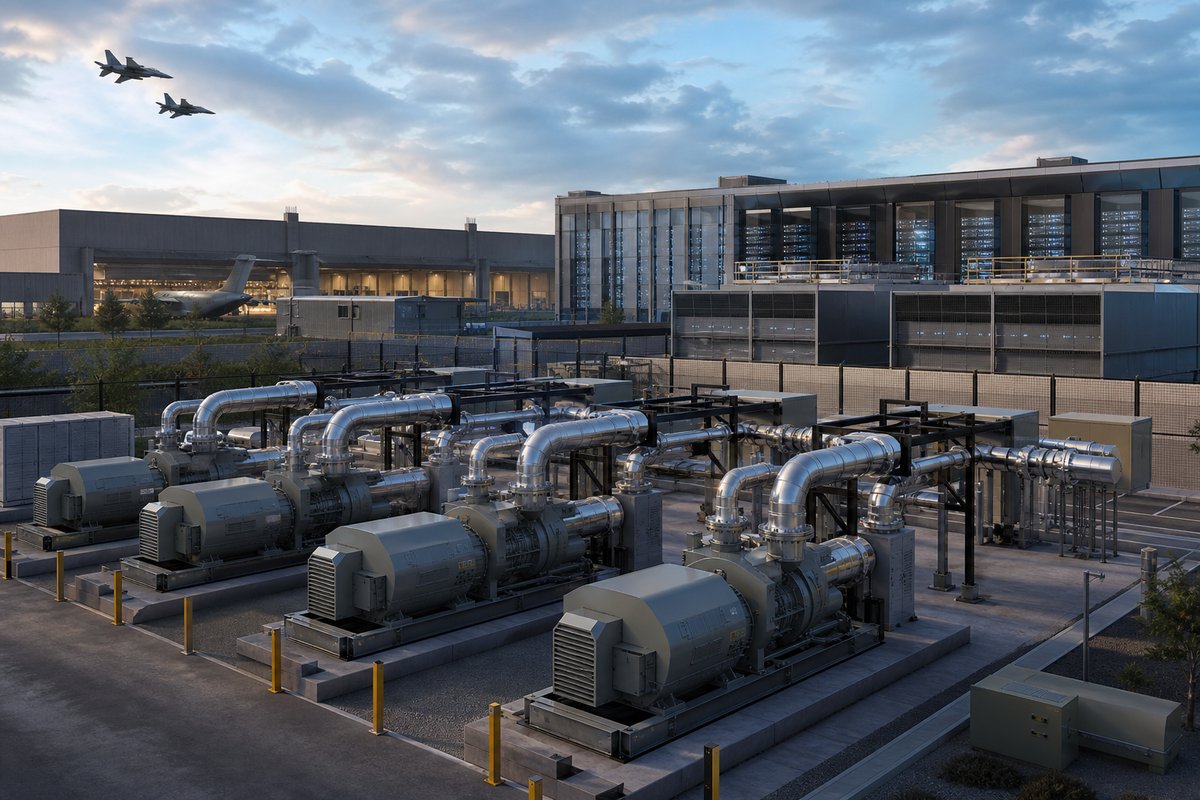
Rolls-Royce is leaning on two fast-growing themes in global markets: higher defense spending and the rapid buildout of AI infrastructure. The British engineering group said those trends are helping shape its next phase of growth, while also boosting demand in its power systems business.
Chief executive Tufan Erginbilgic said the company is already in discussions with hyperscaler data center operators about power systems and small modular reactors, and expects to seek internal approval for a major customer framework agreement. He said a large hyperscaler deal could be signed as soon as early next week, and added that Rolls-Royce is already taking orders for data centers for 2028. According to the company, the shift in demand reflects a broader problem for operators: many are struggling to secure grid connections, so they are increasingly looking for backup and on-site generation solutions. That has expanded demand not only for backup engines, but also for gas engines that can serve as a primary power source.
The company said continuous power systems could make up as much as one-fifth of its power-generation business by 2030, up from less than 10% today. It also raised its growth target for power-generation revenue to 25% a year through 2030, from a previous goal of 20%. Rolls-Royce said the new demand profile should bring more engine sales as well as years of maintenance income. On the defense side, management pointed to long-term spending commitments in the U.K. and NATO as additional support for the business.
The upbeat outlook followed a strong first half. Rolls-Royce reported underlying operating profit of £2.5 billion for the period, up 46% from a year earlier, on revenue of £11.3 billion, more than 24% higher. It then raised full-year guidance for underlying operating profit to £4.7 billion to £4.9 billion, from a prior range of £4 billion to £4.2 billion, and increased its free cash flow forecast to £3.8 billion to £4 billion. Shares rose sharply after the update and have climbed more than 1,300% over the past five years.
Source: cnbc.com