AI smart glasses have finally moved from science fiction into everyday life. While many assume they are just wearable cameras, the latest 2026 models pack hidden assistant features that can completely change how you travel, shop, and interact with the world.
What Most People Miss About Modern AI Eyewear
The AI glasses feature that’s turning heads isn’t just the camera—it’s the multimodal assistant that “sees” what you see. While Meta Ray-Ban frames dominate the market, users often miss their deepest features.
Here are the hidden capabilities many owners overlook:
• Real-time audio translation supporting over 20 different languages
• Multimodal visual search that identifies landmarks or objects you stare at
• In-lens navigation overlaying turn-by-turn walking directions
• Hands-free summaries of long WhatsApp messages
• Built-in teleprompter functions for seamless public speaking
• 6-microphone arrays that isolate your voice in noisy environments
• Transition lens compatibility for automatic UV adjustment outdoors
• Swappable battery arms on modular brands for endless runtime.
Most people buy them to record POV videos, completely missing that these are actually powerful wearable assistants.
How the Top Contenders Stack Up on Price and Specs
Comparing specs reveals a 40% price gap between entry-level and premium models.
The two most useful facts from the list above are the multimodal visual search and real-time translation. These features matter because they eliminate the need to stare at a smartphone while traveling or shopping. Instead of typing a query into a search engine, you simply ask your Meta AI or Google Gemini assistant what you are currently looking at.
While the Brilliant Labs Frame projects data directly onto the glass for $350, the open-ear audio feedback on the Meta Ray-Ban Gen 2 remains the most popular approach for daily use. Battery life is the main limitation across the board—expect around 4 to 6 hours of continuous use, though modern charging cases provide up to 30 hours of total runtime when you are on the go.
| Smart Glasses Model | Base Retail Price | Primary AI Engine | Key Interaction Output |
|---|---|---|---|
| Meta Ray-Ban Gen 2 | $299 | Meta AI | Open-Ear Audio |
| Brilliant Labs Frame | $350 | Noa (OpenAI) | In-Lens Visual Display |
| Solos AirGo V2 | $299 | ChatGPT | Audio with SolosTranslate |
| INMO Go 3 | $399 | DeepSeek / Qwen | AR Waveguide Display |
Reebok Nitrous
Wearable technology is increasingly merging with activewear, allowing runners and cyclists to stay connected without obstructing their hearing. Open-ear audio integrated directly into sporty frames provides a safer alternative to traditional earbuds during outdoor workouts.
The Reebok Nitrous enters this space as a functional option for fitness enthusiasts. It focuses on delivering basic connectivity and audio playback in an athletic, wraparound design that stays secure during heavy movement.

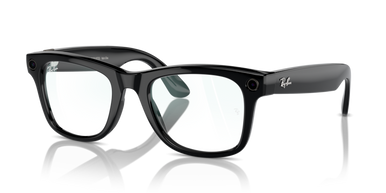
Ray Ban Meta Smart Glasses 0rw4012 Wayfarer
The real shift in smart eyewear comes from the integration of seamless artificial intelligence that can interpret what you are looking at. Conversational AI assistants built into everyday accessories are making hands-free information retrieval a practical reality rather than just a novelty.
The Ray Ban Meta Wayfarer is the current benchmark for this technology, blending a classic silhouette with discreet cameras and microphones. It is suited for early adopters who want the latest visual AI features without compromising on personal style.
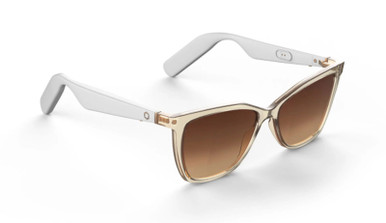
Lucyd Lyte Millennia
For many users, the primary appeal of smart glasses is simply replacing standard wireless earbuds with something more comfortable. Voice assistant integration allows for easy control of smart home devices or quick internet queries without needing to constantly look at a screen.
The Lucyd Lyte Millennia leans into this audio-first approach, providing direct access to smartphone assistants through built-in microphones. It is a solid choice for those who want smart audio features in a modern, fashion-forward frame without the inclusion of privacy-concerning cameras.
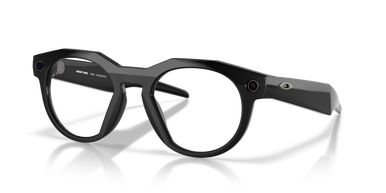
Oakley Meta Hstn Smart Glasses 0ow8002
Expanding smart capabilities into performance eyewear allows the technology to reach a broader range of outdoor lifestyles. Transitioning between bright sunlight and changing environments requires lenses and frames that can keep up with active, on-the-go demands.
Oakley's variation of the Meta smart glasses takes the core AI and capture technology and packages it into their signature HSTN frame. This model is tailored for the streetwear-conscious user who prefers Oakley's modern, bold aesthetics over traditional heritage shapes.
The Prescription Secret: Making Them Your Daily Drivers
You don’t have to sacrifice vision correction to wear smart tech in 2026.
A major barrier for early adopters was the lack of optical customization, but that has completely changed. If you require astigmatism correction or readers, platforms like WebEyeCare specialize in merging standard optics with advanced frames. For example, you can browse WebEyeCare to find the Ray-Ban Meta Wayfarer starting at $299, and customize it with prescription or transition lenses. This retailer stands out because it allows you to upload your prescription directly via their mobile app, utilizing HSA or FSA funds for the optical portion.
It is a massive shift from the bulky gadgets often hyped in glossy Smart TV PR campaigns. Today’s AI glasses look identical to standard designer frames. Retailers routinely offer up to 70% off traditional contact lens and glasses retail prices, making the leap to smart eyewear much more accessible for the average consumer.
The Big Connectivity Misconception Cleared Up
Many people mistakenly believe these AI glasses operate entirely independently of a smartphone.
In reality, almost all models—including the Solos AirGo V2 and INMO Go 3—require a constant Bluetooth tether to an iOS or Android device. The heavy lifting for the AI visual search happens in the cloud, utilizing your phone’s 5G or Wi-Fi data connection. Without your phone nearby, they revert to being basic “dumb” glasses that might capture a 12-megapixel photo, but cannot translate or identify objects.
The bottom line: The AI glasses feature that’s turning heads is incredibly useful, but it relies on a strong mobile signal. If you travel internationally, ensure you have an active roaming data plan. Embracing these wearables can save you hours of screen time each week, provided you understand their reliance on your pocketed smartphone.
This article is for informational purposes only. Prices, features, and availability of smart glasses and AI services are subject to change. Always verify current offers and compatibility directly with the manufacturer or authorized retailer.
Sources
WebEyeCare – Official Site I Used Ray-Ban Meta Glasses For 2 Years — My Honest Review Google’s New AI Smart Glasses Are Unreal – Real Time Translation, Memory & More!